Regular price
$39.95 AUD
Sale price
$39.95 AUD
Regular price
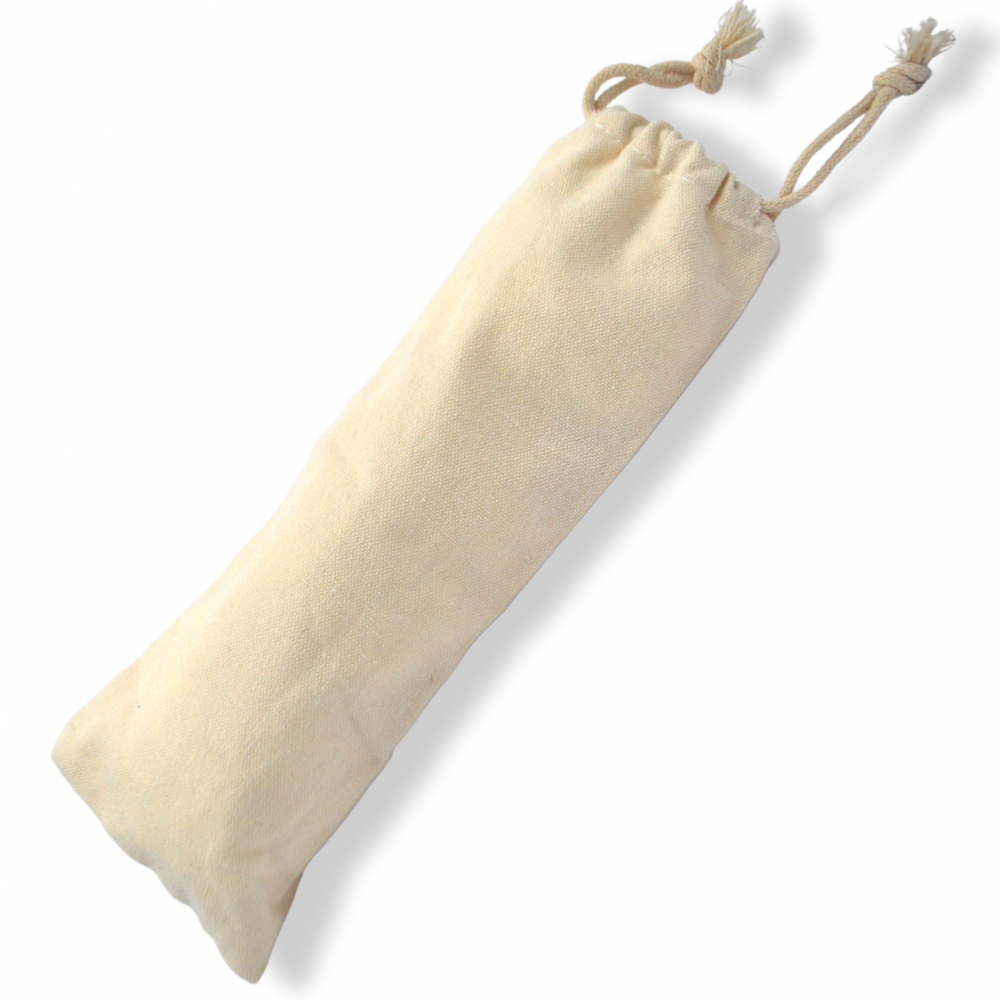
Here's a little gift to say "Welcome to the SUNNYBOD™ Family". Receive a FREE Brush Pouch & Canister Cleaning Brush with every Sunscreen Brush purchase. Stock is limited so act quickly. We don't want you to miss out!


If getting sunscreen onto your child feels impossible, you are far from alone. It is one of the most common frustrations parents and carers face, and in Australia, where UV levels are among the highest in the world, it is also one of the most important to solve.[1]
The good news is that most sunscreen battles come down to a handful of specific causes, and once you know which one you are dealing with, the fix is usually straightforward, or at least easier to navigate. This guide walks through why children resist sunscreen, and exactly what to do about each reason, so the whole thing becomes quicker, calmer, and far less of a fight.
Quick answer
Children usually resist sunscreen for one of four main reasons: they dislike the feel or smell, they want control, they are in a hurry to play, or it stings their skin or eyes. Work out which one applies, then match the fix. Choose a formula and tool they find comfortable, let them help apply it, build it into the routine before play begins, keep it out of eyes, and choose a formula that does not irritate their skin. Applying after they get dressed, keeping the script short, and letting them use a brush themselves, can all reduce the battle. Pair sunscreen with a hat, clothing, sunglasses, and shade, and reapply every two hours.
Most sunscreen resistance falls into one of four buckets. There are many more, but we will cover the four most common. The trick is to stop treating it as one problem and start matching your approach to each actual cause.[3]
Sticky hands and strong scents are one of the most common reasons children dig their heels in. A few things help here.
Try a fragrance-free formula, as the smell alone can be the dealbreaker.[3] Consider the sunscreen consistency, thick or thin, and how it is applied, too. What does your child prefer? Applying with a soft brush rather than cold hands removes the sticky-hands problem entirely, for both of you, and many children find the light sweep of bristles far more comfortable and predictable than being clumsily rubbed with lotion. It can feel more like face painting than a chore.
Whatever you use, the more comfortable and predictable the sensation, the less resistance you will meet. The easiest sunscreen routine is the one that does not feel like an ordeal.
When a child insists on doing it themselves, the most effective response is usually to let them, within reason. Giving a child a sense of control lowers resistance, and it builds a habit they will carry for life.[4]
Let them choose between two parent-approved options, or let them hold the applicator and apply to your arms, then you to theirs. Or let them have a turn applying to their own arms and legs while you handle the trickier areas. A brush applicator works particularly well for this, because it is easy for small hands to hold and use, and there is no greasy bottle to squeeze or spill. Dermatologists have long suggested that children who dislike sunscreen on their hands can apply it with a brush instead.[4]
Letting them "do it themselves" does not mean leaving them to it. An adult should always finish the job and check that all the exposed skin has been covered, especially easy-to-miss areas like ears, the back of the neck, and the tops of the hands and feet.
This is the one most parents get wrong, and it is the easiest to fix. The mistake is leaving sunscreen until the moment before going outside, when the child can already see the fun waiting for them. Once they are in play mode, the battle is half lost.
Apply earlier than you think you need to. Putting sunscreen on after getting dressed or brushing their teeth, before snacks, or before the words "let's go outside" makes a real difference.[6] Applying before swimmers or clothes go on has the bonus of catching every bit of skin and giving the sunscreen a chance to absorb before play. The car seat is another good moment for younger children, while they are already strapped in.
Keep the script short and consistent. A calm routine like "face, arms, legs, done" beats a long explanation or a negotiation. Children cope far better with a predictable, consistent routine than with a debate, and over time the routine itself does the work.[6]
A single stinging-eyes experience can create weeks of resistance. The fix is precision. Keeping sunscreen application controlled around the eye area while still protecting the face.
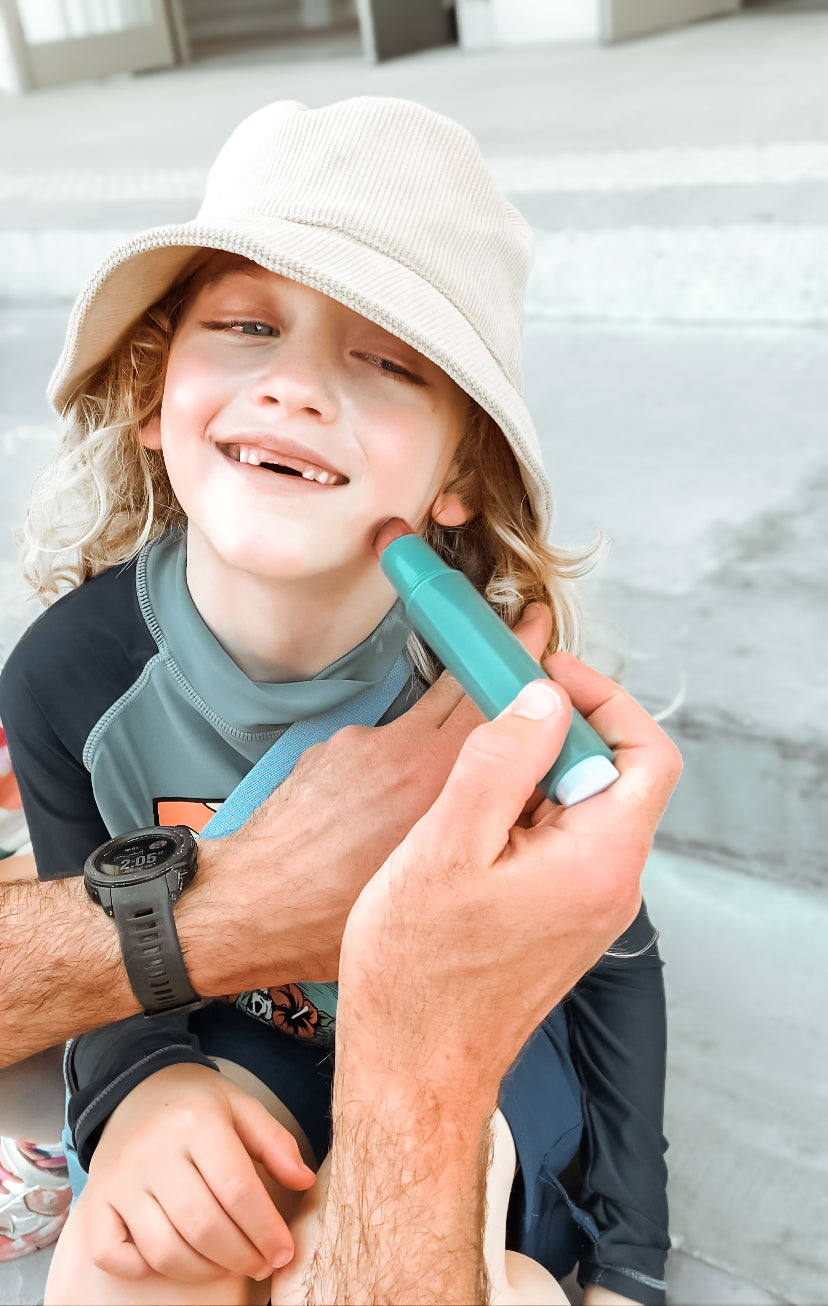
A brush applicator helps because it gives you far more control around the eyes, ears, hairline, nose, and cheeks than a fingerful of sunscreen. You can work close to the eyes without getting product in them, and control the amount applied more easily. For the eye area specifically, applying carefully and then relying on a hat and sunglasses for extra protection keeps things comfortable and sting-free.[1]
Two final strategies work across almost every child. The first is to make it playful. Turn it into a race against a timer, sing a short song that signals when application will be finished, or use the brush like face painting. Paint dots and hearts and then blend them in, for example. Younger children especially respond to knowing it will be over by the end of a song.[5]
The second is consistency. When sunscreen becomes a fixed part of the daily routine, like brushing teeth, the resistance fades because there is nothing to negotiate. Children who see their parents applying sunscreen are also more likely to accept it themselves, so doing yours alongside theirs helps more than you might think.[7]
For some children, sunscreen resistance is part of a broader sensitivity to textures and sensations, and the usual tricks may not be enough. Here, predictability and comfort matter most.
A calm, consistent routine helps, as does removing the parts that tend to overwhelm: the cold shock of lotion, the greasy hands, and the unpredictability of where it will land or the pressure it will be applied with. A hands-free brush keeps the experience consistent each time and avoids skin-to-skin rubbing, which some children find easier to tolerate. Apply in the same order every time so the child knows what is coming and can learn the routine. If your child has significant sensory needs, an occupational therapist can offer tailored strategies.[5]
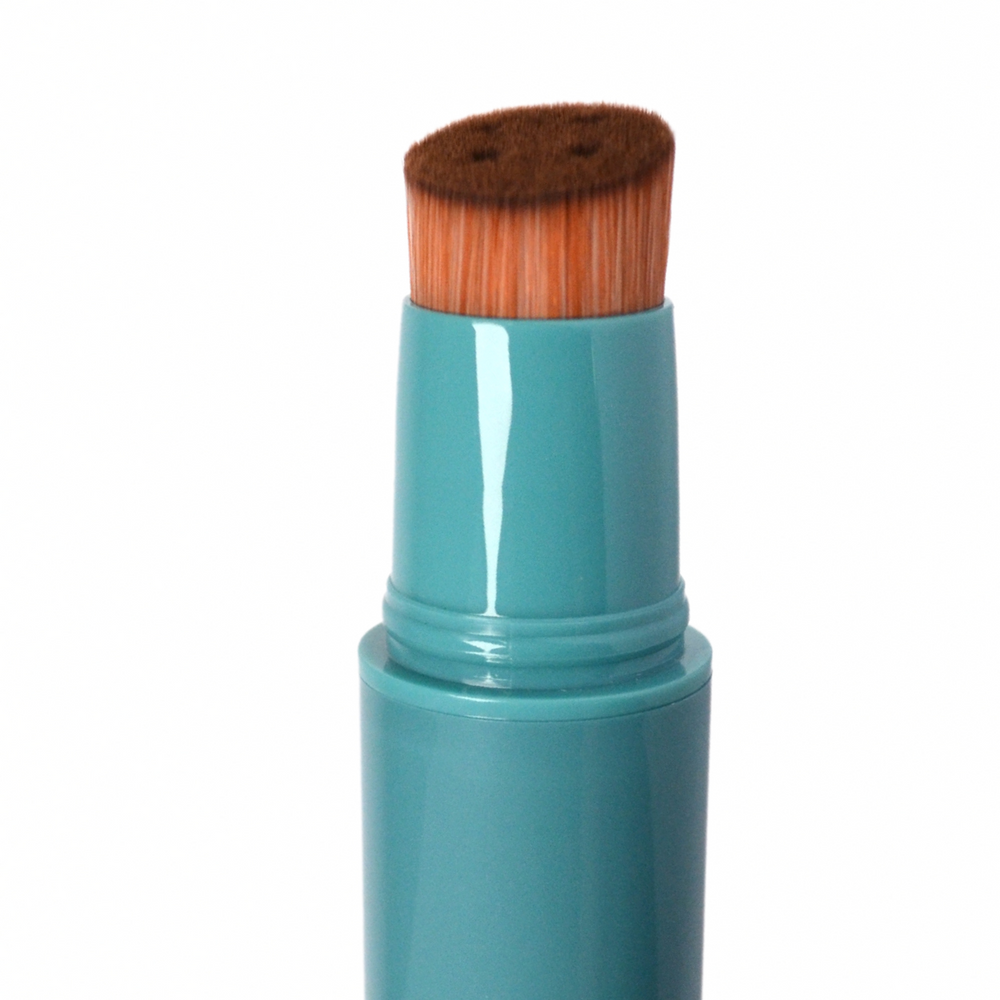
You will have noticed a brush applicator comes up across several of these solutions, and that is because it removes a few of the most common friction points at once. A refillable brush like the SUNNYBOD™ Refillable Sunscreen Applicator Brush keeps hands clean, makes the face and ears easier to manage, is simple enough for a child to help with, and lets you reapply on the go without a place to wash greasy hands.
It is not a magic fix, and no single tool works for every child, but by taking away the mess, the sticky hands, and some of the unpredictability, it removes several of the reasons sunscreen becomes a fight in the first place. For the full how-to, see our guide on how to use a sunscreen applicator, and for help choosing a tool, our guide to the best sunscreen applicator for kids.
However you win the sunscreen battle, the fundamentals still apply. Cancer Council recommends sun protection whenever the UV Index is 3 or above, and a broad-spectrum SPF 50 or SPF 50+ sunscreen applied 20 minutes before going outside and reapplied every two hours, or sooner after swimming, sweating, or towel drying.[1]
Sunscreen is only one part of the picture. Pair it with the rest of the Slip, Slop, Slap, Seek, Slide message: protective clothing, a hat, shade, and sunglasses. For babies and very young children, shade and clothing are the primary forms of protection.[2]
Apply before they are in play mode, ideally after they get dressed or while strapped in the car seat. Keep the routine short and predictable, let them help with their own arms and legs, and use a tool that does not feel unpleasant, such as a soft brush rather than cold hands. Make it playful with a timer or a song, and always finish by checking the skin is fully covered.
Apply in sections rather than all at once, and work on tricky areas first. Use SPF 50+ clothing to cover exposed skin in addition to sunscreen. Many parents find a brush applicator quickest because it keeps hands clean and is most kids find this style of application fun. Letting the child participate or applying whilst they are strapped into their car seat can also reduces the wriggling.
Apply carefully around the face and eye area using a precision tool like a sunscreen applicator brush, being sure not to get it in their eyes, and use a hat and sunglasses for extra protection there. A brush applicator gives more control near the hairline, cheeks, and eyes than hands or sprays. If stinging continues with a particular product, your pharmacist or doctor can suggest a formula that may suit better. Build a consistent, predictable routine around application, with a formula that does not irritate their skin.
Children can start participating from around school age, but an adult should always supervise and check coverage regardless of age. Letting them help builds independence and good habits, while you make sure all the exposed skin is actually covered.
The bottom line
Sunscreen battles almost always trace back to a specific cause. The feel, the need for control, the timing, or formulas that irritate. Match your approach to the reason, or reasons. Apply before play begins, keep the routine short and consistent, and let your child take part. A comfortable formula and a hands-free tool like a sunscreen brush applicator remove much of the friction. Win the routine, and the daily fight quietly disappears.
The SUNNYBOD™ refillable sunscreen applicator brush keeps hands clean, makes tricky areas easier, and is simple enough for kids to help with. A small change that makes the daily sunscreen routine far less of a fight.
Shop applicatorsReferences
1. Cancer Council Australia. Be SunSmart.
2. Cancer Council NSW. Sun protection for babies and children.
3. Child Mind Institute. Summer and sensory processing issues.
4. The Skin Cancer Foundation. Teach your kids about sun protection.
5. NESCA. Sensory-friendly sunscreen for tactile-sensitive kids.
6. Raising Children Network (Australia). Sun safety for kids and teens.
7. First Five Years. Raising a SunSmart generation of children.
Disclaimer: This information is provided for general guidance only and is not intended to replace medical or professional advice. Always follow sun-safety recommendations from your local health authorities. Sunscreen should be used in combination with other sun-protection measures, including protective clothing, hats, shade, and sunglasses. Consult your doctor or healthcare provider if you have questions about sunscreen use, skin sensitivities, or individual needs. Always consult your sunscreen manufacturer before transferring product from its original packaging as doing so may affect efficacy.

The #1 Beauty Brush you can't live Without!
Welcome to The SUNNYBOD™ Blog — your go-to space for sun safety tips, parenting advice, expert insights, and all things outdoors. We’re passionate about making sunscreen fun, simple, and mess-free for families and sun lovers everywhere. Explore how-to guides, get your questions answered, discover parent hacks, and learn smarter ways to protect your skin. Whether you're a beach-goer, outdoor adventurer, or everyday parent, this is your hub for staying sun-safe with confidence and ease.
Your cart is empty
Spend another $1.00 and get free shipping!