Regular price
$39.95 AUD
Sale price
$39.95 AUD
Regular price
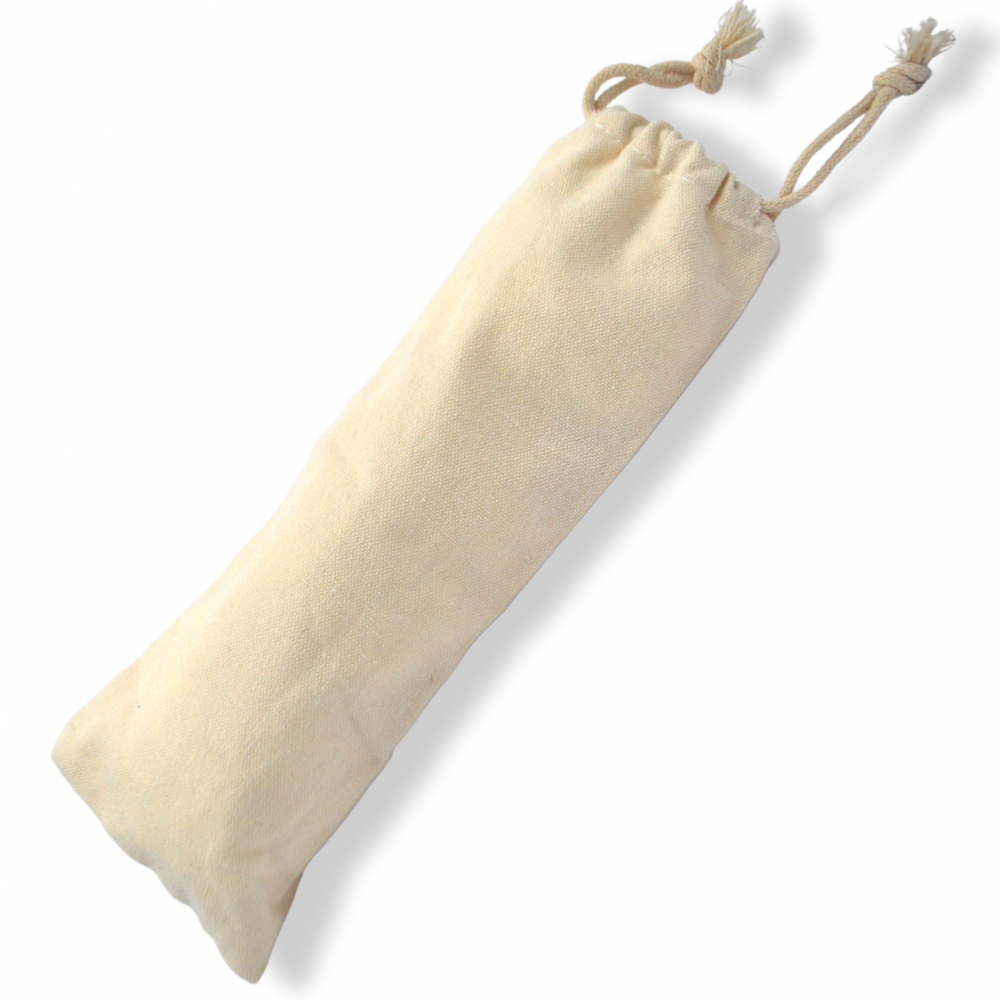
Here's a little gift to say "Welcome to the SUNNYBOD™ Family". Receive a FREE Brush Pouch & Canister Cleaning Brush with every Sunscreen Brush purchase. Stock is limited so act quickly. We don't want you to miss out!


School mornings are a race. Lunchboxes, lost shoes, the bus or the bell, and somewhere in that chaos, sunscreen is supposed to happen too. For most families it is the first thing to get skipped, yet the school day falls squarely across the hours when UV is at its strongest. Children are outside for recess, lunch, sport, and the walk home, often without an adult to reapply for them.
The good news is that a sunscreen routine for school does not need to be complicated. With a simple morning habit and a realistic plan for topping up during the day, you can give your child solid, consistent sun protection without adding stress to an already busy morning. This guide walks through exactly how, using Australian sun-safety guidance, and covers the part most advice skips: how kids can actually reapply at school.
Quick answer
Build sunscreen into the morning routine, just like brushing teeth. Apply a broad-spectrum SPF 50 or SPF 50+ sunscreen to all exposed skin about 20 minutes before leaving home. Pack a sunscreen they can reapply themselves before lunch or afternoon sport, since protection needs topping up every two hours. Pair it with a broad-brimmed hat, protective clothing and other sun safety methods. Check your local sun protection times using the free SunSmart Global UV app, and apply whenever the UV Index is 3 or above.
It is easy to think of sun protection as a weekend or beach thing. But children spend the middle of the day, when UV is highest, at school. Recess, lunch, PE, sport, and outdoor learning all happen during peak UV hours, and that adds up across a week, a term, and a childhood.
This matters because sun damage is cumulative. Australia has one of the highest rates of skin cancer in the world, with two in three Australians developing some form of skin cancer in their lifetime, and UV damage during childhood is strongly linked to skin cancer risk later in life.[1] Building good habits early is one of the most protective things you can do.
In Australia, sun protection is recommended whenever the UV Index reaches 3 or above, which across much of the country covers most of the school year, not just summer.[2] That is why a daily routine works better than reacting to sunny days. UV is not the same as heat, and damaging levels are reached even on cool or cloudy days.
The simplest way to make sunscreen stick is to attach it to something your child already does every morning. Anchor it to teeth brushing or getting dressed, so it becomes automatic rather than another thing to remember. Keeping the sunscreen right next to the toothbrush is a small trick that works surprisingly well.
Here is a simple morning sequence:
Cancer Council recommends applying sunscreen about 20 minutes before going outside so it can absorb and reach its full SPF.[3] On a school morning that 20-minute window is easy to lose, which brings us to a genuinely useful point that most advice misses.
A common worry is that there is no time for sunscreen to absorb before the morning dash out the door. Here is the helpful part, it does not have to be applied at home. Cancer Council guidance for schools notes that sunscreen can be applied 20 minutes before going outdoors, or on arrival at school, so it absorbs before the first time children head outside.[4]
In practice, that gives you two easy options. Apply at home as part of the morning routine, ideally 20 minutes before leaving, or have your child apply as soon as they arrive at school, well before recess. Either way, the sunscreen has time to absorb before the first outdoor break.
Worth knowing
If mornings are simply too rushed, applying sunscreen immediately before going outdoors is far better than not applying it at all.[4] The 20-minute window helps it reach full strength, but some protection beats none. The goal is consistency, not perfection.
Here is the reality that morning application alone cannot solve. Sunscreen does not last all day. It needs reapplying every two hours, and more often after sweating, swimming, or towel drying.[3] A layer applied at 8am has largely worn off by lunchtime, right when your child heads out for the longest, sunniest break of the day.
Cancer Council guidance for schools suggests aiming for sunscreen to be applied at least twice during the day, for example once in the morning and again before lunch or afternoon outdoor time.[4] The challenge is that you are not there to do it, so your child needs to be able to reapply themselves, quickly and without mess.
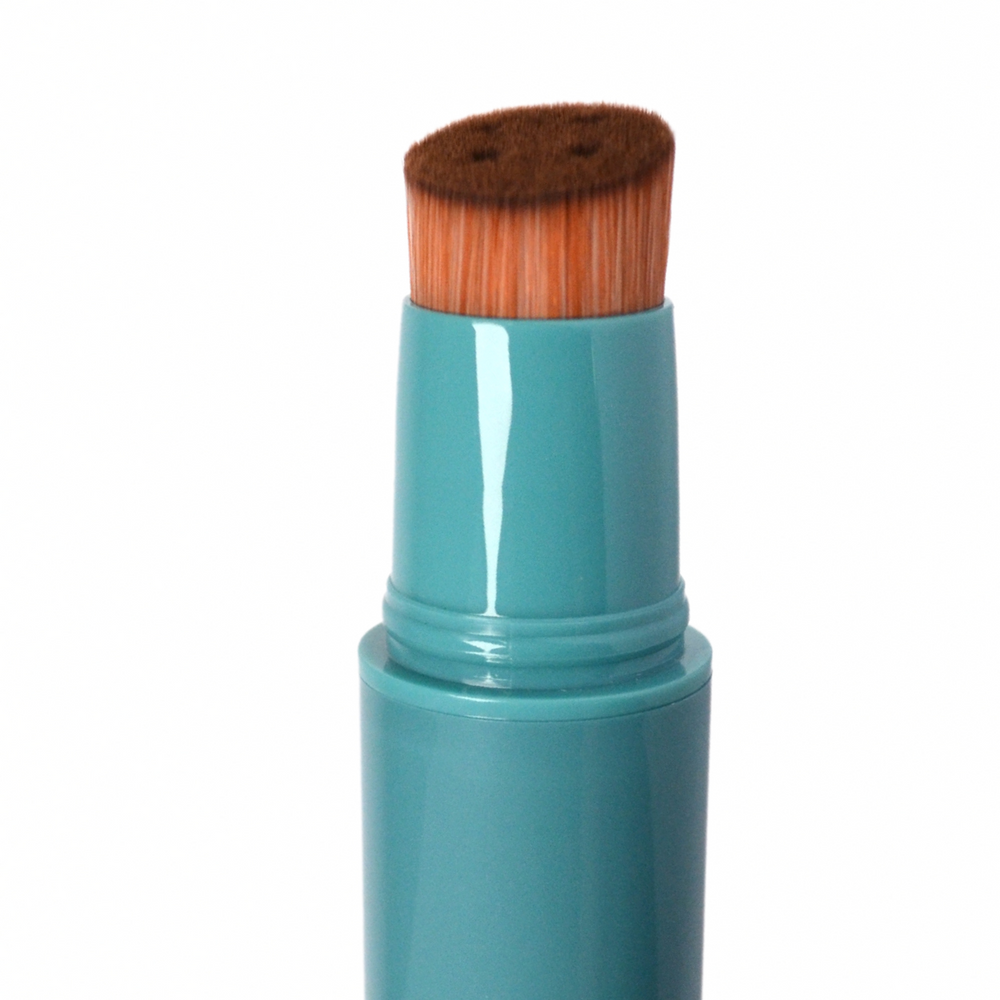
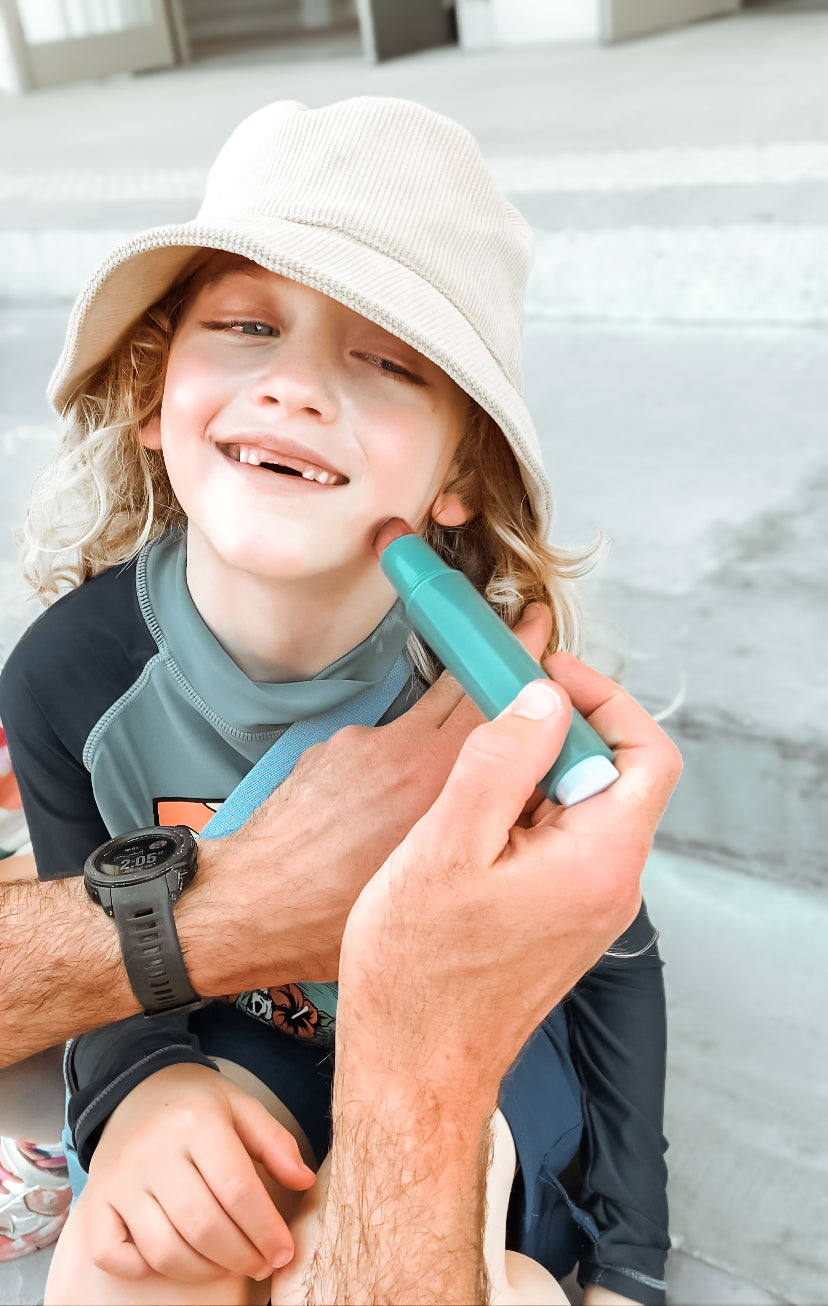
This is exactly where most traditional sunscreen falls down at school. A bottle of lotion means greasy hands with nowhere to wash them, sunscreen on the uniform, and a child who would rather skip it than deal with the mess. A hands-free applicator removes that barrier. A refillable brush like the SUNNYBOD™ Sunscreen Applicator lets a child top up their own face, ears, neck, and arms in seconds, with no greasy fingers and nothing to wipe off, which makes reapplication something they can actually do.
To make school reapplication realistic:

The core routine stays the same at every age. Apply in the morning, reapply during the day, pair with a hat, shade and other sun safety methods. What changes is how much your child can do on their own.
For little ones, an adult applies and checks coverage. Many centres ask families to apply sunscreen before drop-off or on arrival, then an educator reapplies before outdoor play. This is the age to start naming the routine out loud ("hat on, sunscreen on") so it becomes familiar, and to choose a formula your child tolerates. A soft liquid sunscreen applicator brush, like SUNNYBOD's, can make application far less of a battle for children who dislike the feel of sunscreen. It makes application simple, predictable and removes some of the barriers that come with traditional application methods. It also means educators can take a more hands off approach to sunscreen application.
This is where independence grows. Younger primary kids still need an adult to apply and check in the morning, but they can begin helping. Older primary kids can often apply their own arms and legs while you supervise the face and ears and confirm coverage. Pack a spare sunscreen in their bag, label it clearly, and teach them to reapply before lunch. A hands-free applicator is ideal here, because it lets them reapply at school without mess or help.
Teens manage their own routine, so the goal shifts to making it easy and worth doing. Framing sun protection around healthy skin tends to land better than warnings, and a quick, mess-free applicator that fits in a bag suits a teenager who will not reapply if it is messy or fiddly. Encourage them to check the UV each day and to keep sunscreen with their everyday gear so it travels to sport and outdoor activities.
Sunscreen is important, but it works best as part of a complete approach. Cancer Council's Slip, Slop, Slap, Seek, Slide message captures the full picture, and all five matter at school.[2]
A broad-brimmed hat is worth singling out. Caps are popular but leave the ears and the back of the neck exposed, two commonly burned areas, so a bucket or broad-brimmed hat gives far better protection.[2] Many Australian schools have a hat rule for exactly this reason.
Before sending sunscreen to school, it is worth a quick check of your school's approach. Most Australian primary schools take part in the national SunSmart Schools program and actively encourage sunscreen use, often building application into the daily routine.[5]
A few practical things to confirm: whether the school provides sunscreen or expects families to supply it, whether your child can carry and self-apply their own, and when application happens during the day. Labelling your child's sunscreen with their name avoids sharing, and a quick chat with the teacher about when your child can top up makes the routine far more likely to actually happen.
Either works, as long as it goes on before the first time they head outside. Cancer Council guidance for schools notes sunscreen can be applied 20 minutes before going outdoors, or on arrival at school, so it has time to absorb.[4] Applying at home as part of the morning routine is simplest for most families, but applying on arrival is a good option when mornings are rushed.
Sunscreen should be reapplied every two hours, and sooner after sweating, swimming, or towel drying.[3] In practice, aiming for at least one top-up during the day, such as before lunch or afternoon sport, makes a real difference.[4] A hands-free applicator your child can use themselves makes this realistic.
Cancer Council recommends a broad-spectrum SPF 50 or SPF 50+ sunscreen for everyday use, applied generously to all exposed skin.[3] Broad-spectrum means it protects against both UVA and UVB. For children with sensitive skin, a fragrance-free formula is often gentler, and you can patch test any new product first. Always seek guidance from a medical professional who can give you specific advice for your family.
In most Australian schools, yes, but policies vary, so check with your school. Most primary schools take part in the SunSmart Schools program and encourage sunscreen use.[5] Label your child's sunscreen with their name, and confirm with the teacher when and where your child can reapply.
It depends on the UV, not the temperature. Sun protection is recommended whenever the UV Index is 3 or above, which in much of Australia includes large parts of the year, even on cool or cloudy days.[2] The free SunSmart Global UV app shows your local sun protection times each day.
The bottom line
A school sunscreen routine works best when it is simple and consistent. Anchor a morning application to teeth brushing, use a broad-spectrum SPF 50 or SPF 50+, and apply 20 minutes before leaving or on arrival at school. Then plan for a top-up during the day, ideally with a hands-free applicator your child can use themselves, since protection needs reapplying every two hours. Add a broad-brimmed hat and shade, check the UV when it is 3 or above, and you have given your child genuine, everyday protection during the hours that matter most.
The SUNNYBOD™ refillable sunscreen applicator brush is hands-free, mess-free, and easy enough for kids to reapply themselves at school. Fill it with your favourite SPF 50+ and turn sunscreen into a simple, positive, and repeatable routine.
Shop applicatorsReferences
1. Cancer Council Australia. SunSmart in schools and early childhood.
2. Cancer Council Australia. Be SunSmart.
3. Cancer Council Australia. Advice on how to choose, apply and store sunscreen.
4. Cancer Council SA. SunSmart schools: sunscreen application guidance.
5. Cancer Council Australia. SunSmart primary school and early childhood resources.
Disclaimer: This information is provided for general guidance only and is not intended to replace medical or professional advice. Always follow sun-safety recommendations from your local health authorities. Sunscreen should be used in combination with other sun-protection measures, including protective clothing, hats, shade, and sunglasses. Consult your doctor or healthcare provider if you have questions about sunscreen use, skin sensitivities, or individual needs. Always consult your sunscreen manufacturer before transferring product from its original packaging as doing so may affect efficacy.

The #1 Beauty Brush you can't live Without!
Welcome to The SUNNYBOD™ Blog — your go-to space for sun safety tips, parenting advice, expert insights, and all things outdoors. We’re passionate about making sunscreen fun, simple, and mess-free for families and sun lovers everywhere. Explore how-to guides, get your questions answered, discover parent hacks, and learn smarter ways to protect your skin. Whether you're a beach-goer, outdoor adventurer, or everyday parent, this is your hub for staying sun-safe with confidence and ease.
Your cart is empty
Spend another $1.00 and get free shipping!