Regular price
$39.95 AUD
Sale price
$39.95 AUD
Regular price
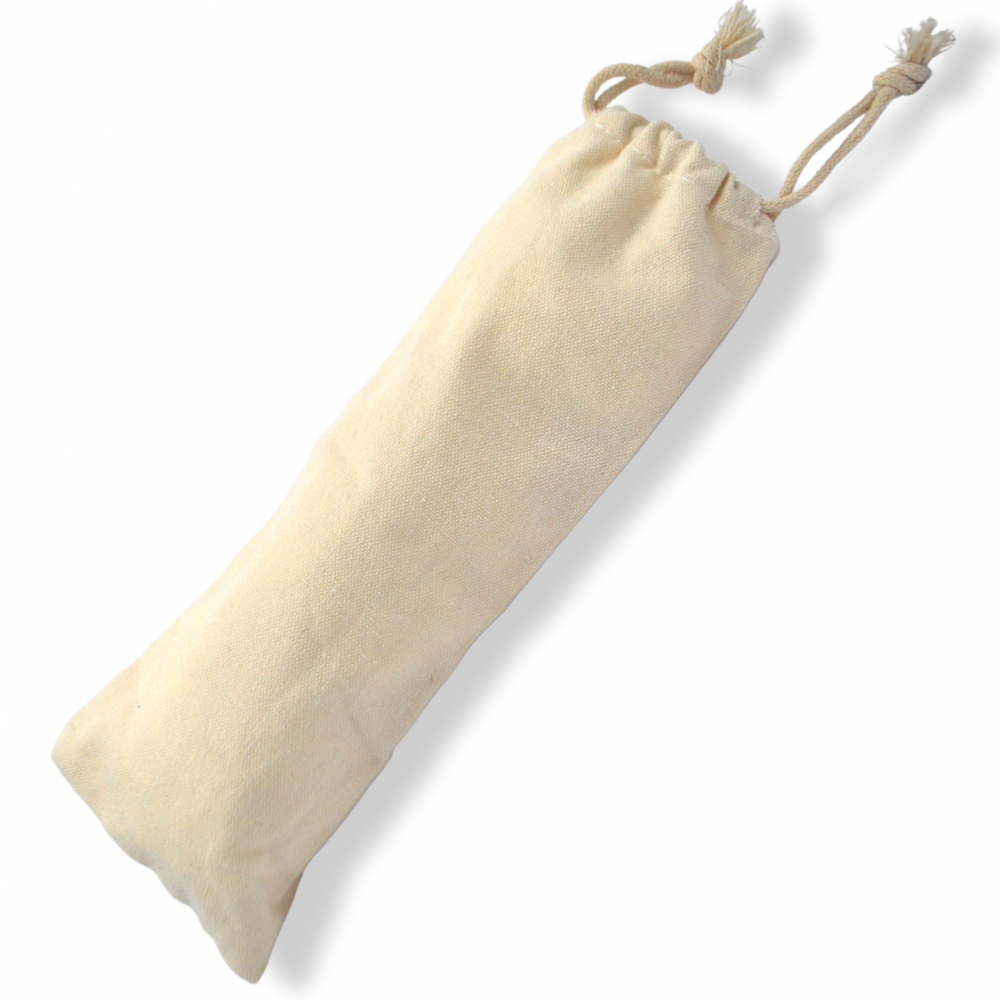
Here's a little gift to say "Welcome to the SUNNYBOD™ Family". Receive a FREE Brush Pouch & Canister Cleaning Brush with every Sunscreen Brush purchase. Stock is limited so act quickly. We don't want you to miss out!


Most people are surprised to learn that even when they buy an SPF 50+, they may only be getting a fraction of that protection. It is not that the sunscreen does not work. It is that most of us simply do not apply enough.
Research consistently shows that sunscreen is under-applied in real life, often at only a quarter to half the amount used in testing.[1] When less is applied than the amount used to determine the SPF, the protection you actually get is lower, so a thinly applied SPF 50+ can behave more like a much lower SPF in practice.
One of the simplest ways to close that gap is a method known as the three-finger rule. This guide explains what it is, how accurate it really is, how it fits with Australian guidance, and how to use it to build better sunscreen habits.
Quick answer
The three-finger rule is a simple visual guide for how much sunscreen to use on your face. You squeeze a line of sunscreen along the length of three fingers, the index, middle, and ring finger, which is roughly half a teaspoon. It is not an official standard and it is an estimate rather than an exact measure, since finger and face size vary, but it is a practical way to apply closer to the recommended amount instead of guessing. For the whole body, Cancer Council recommends around 35mL, about seven teaspoons. Apply 20 minutes before going outside and reapply every two hours, and after swimming, sweating, or towel drying.
In Australia, sunscreen is regulated by the Therapeutic Goods Administration as a therapeutic good. For a sunscreen to carry an SPF rating, it must be tested in controlled laboratory conditions at a set application thickness of 2mg per square centimetre of skin.[2] The problem is that real life does not look like a lab.
Parents are busy, kids that wriggle and don't like SPF, and sunscreen can feel cold or sticky. When people apply by eye, they almost always use too little. Cancer Council's advice is to apply sunscreen generously to all exposed skin, but "generously" is open to interpretation on a rushed school morning.[3]
That is why simple visual rules help. They turn "apply enough" into something you can actually picture and repeat.
The three-finger rule is a visual guide for estimating how much sunscreen to apply to the face. You squeeze sunscreen along the full length of three fingers, usually the index, middle, and ring finger. Combined, that comes to roughly half a teaspoon, which is the amount dermatologists commonly recommend for the face.
It is designed to be easy to remember and simple to copy. Rather than guessing, it gives you a repeatable reference point you can use every day.
Here is the part most people miss. Sunscreen protection does not drop in a straight line with the amount you apply. Applying half the recommended amount does not give you half the protection, it can reduce it disproportionately more.[4] The Skin Cancer Foundation notes that applying half the recommended amount can bring the effective protection of a high-SPF sunscreen down dramatically.[4]
That is why how much you apply matters just as much as which sunscreen you choose. The three-finger rule exists to nudge real-world habits closer to the amount the SPF rating is based on.
Honestly, it is an estimate, not a precise measurement, and it is worth being clear about that. It is not a TGA standard, and it does not claim to replicate laboratory testing. Finger length and face size vary from person to person, so three fingers on one adult is not exactly the same dose as three fingers on another, and a child's fingers and face are smaller again.[5]
What it does well is solve the biggest real-world problem, under-application. As a rough, repeatable guide it moves most people much closer to enough than guessing ever would. It is not perfect, but it is far better than a quick smear. Treat it as a helpful starting point, then lean towards applying a little more rather than less.
The three-finger rule covers the face. For the rest of the body, Australian sun-safety education often uses the teaspoon rule. Cancer Council recommends roughly one teaspoon, about 5mL, for each of these areas: the face, neck and ears together, each arm, each leg, the front of the body, and the back. That adds up to around 35mL, about seven teaspoons, for a full-body adult application.[3]
Worth knowing
The two guides measure slightly different areas, so they are close but not identical. The three-finger rule (about half a teaspoon) is a guide for the face, while Cancer Council's one-teaspoon measure covers the face, neck, and ears together (about one teaspoon, 5mL). Both exist to solve the same problem, applying enough without guessing, so think of them as complementary rather than competing.
The three-finger rule measures roughly how much to use. It does not tell you whether you have actually covered every area. The most commonly missed spots are the ears, the back of the neck, the hairline, around the eyes, the sides of the nose, and the tops of the hands and feet. Applying enough and covering everywhere are two separate jobs, so it is worth slowing down on those easily-missed areas regardless of how much you squeeze out.
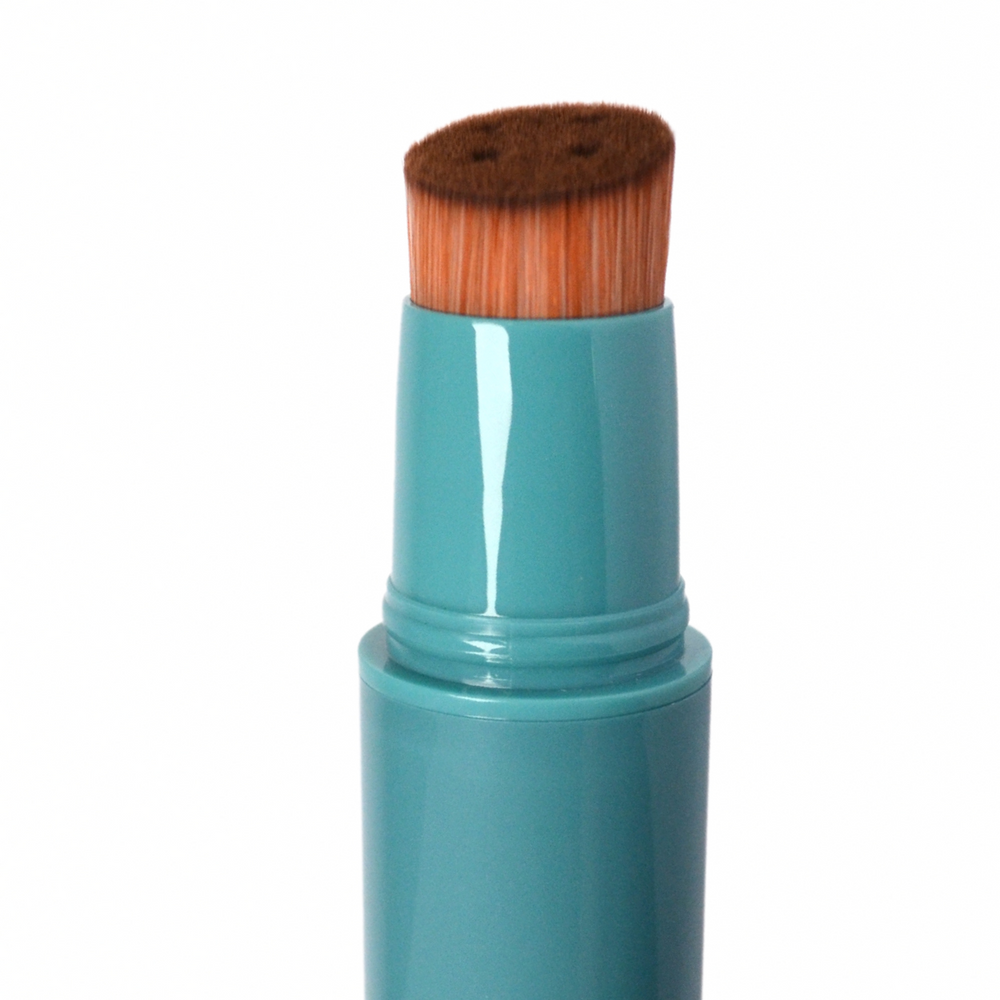
The three-finger rule assumes you are squeezing sunscreen onto your fingers. If you use a refillable applicator brush like the SUNNYBOD™ Sunscreen Applicator, the sunscreen sits in the canister and pumps through the bristles, so you cannot lay it along three fingers. That raises a fair question: how do you know you have used enough?
Using the canister as a rough guide
A SUNNYBOD™ canister holds about 20mL of sunscreen. At the recommended teaspoon (5mL) for the face, neck, and ears, that is roughly four face, neck, and ears applications per fill. Watching how quickly the canister empties is a useful rough gauge over time that you are using enough, since the most common mistake is applying too little.
Because most people under-apply, the reliable habit is to apply one full, even layer and then go over it again with a second coat.
Important: the canister is a rough reference, not a precise dose measure. It does not tell you exactly how much sunscreen has landed on your skin, so use it as a guide alongside a generous two-coat application rather than a guarantee, just like you would the three-finger rule.
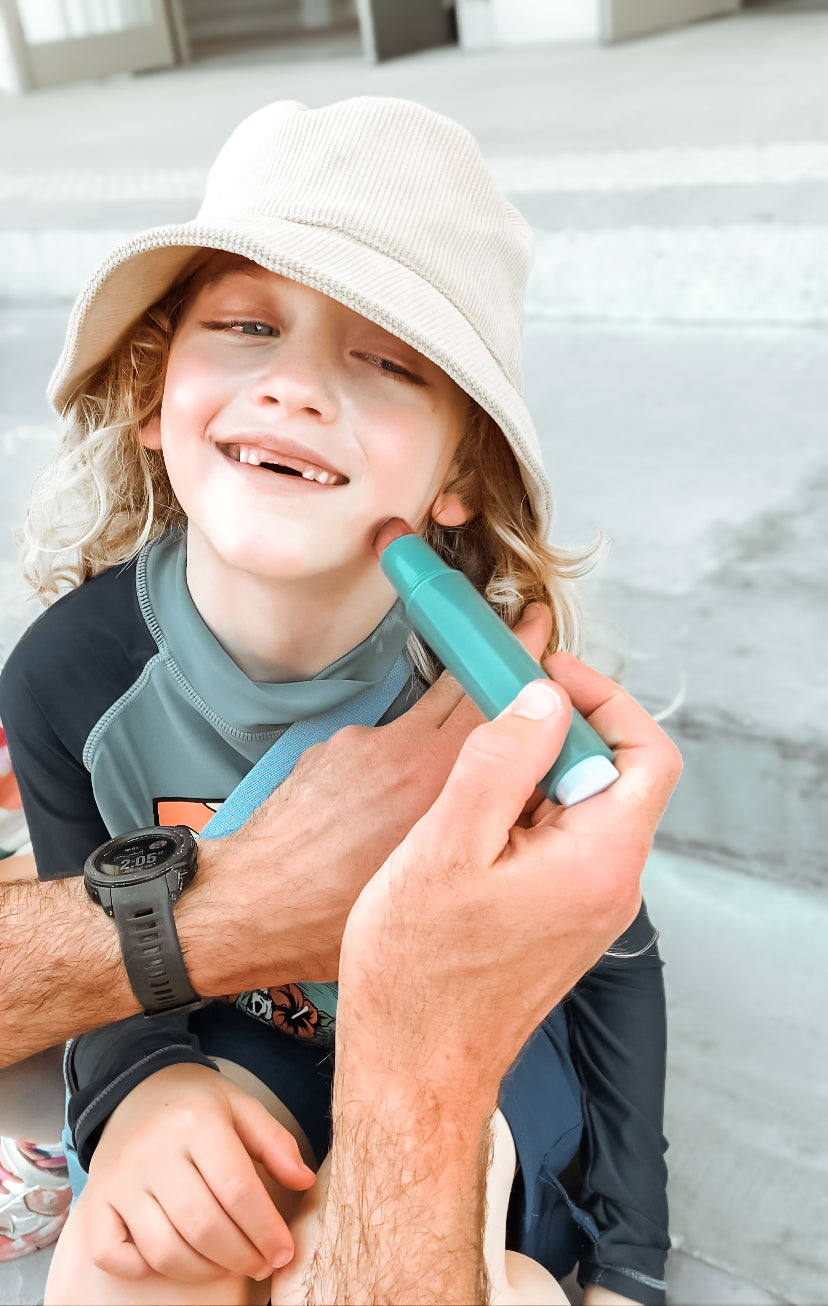
A brush will not measure the dose for you, but it does make applying a generous, even amount easier and less messy, especially on the face and ears where most people skimp. For more on this, see our guides on how to use a sunscreen applicator and whether sunscreen brushes work.
There are no Australian clinical studies testing the three-finger rule specifically in children, so treat it as a practical guide rather than a precise method. Children have smaller faces and fingers, and they tend to use very little and miss areas when applying themselves, so a clear visual reference helps carers and kids apply more consistently.
Tools that make application easier around tricky areas like the ears, hairline, and eyes can help children apply more willingly and more often, which matters when they are learning to do it themselves or find the feel of sunscreen difficult. For more, see our guide to the best sunscreen applicator for kids. As always, an adult should supervise and check for sufficient coverage.
No matter how well you apply sunscreen, it does not last all day. Cancer Council recommends applying 20 minutes before going outside, and reapplying every two hours, and after swimming, sweating, or towel drying.[3] Children are especially active, so reapplication matters to keep protection consistent.
Sunscreen is also only one part of sun protection. Cancer Council recommends protection whenever the UV Index is 3 or above, using sunscreen alongside protective clothing, a broad-brimmed hat, shade, and sunglasses.[3] No single measure works on its own.
For the face, most guidance points to about three fingers, roughly half a teaspoon, rather than two. The two-finger amount is often cited but tends to fall short for many people, and since the bigger real-world problem is under-applying, it is safer to lean towards the three-finger amount or best case a little more.
No. The amount you apply is the same regardless of SPF. A higher SPF gives slightly more protection per application, but it does not last longer and does not mean you can apply a thinner layer.[3]
No. A pea-sized blob is well under what is needed. The general recommendation is around half a teaspoon, the three-finger amount, for the face, with Cancer Council's one-teaspoon measure covering the face, neck, and ears together.
Cancer Council recommends about 35mL, roughly seven teaspoons, for a full-body adult application: about a teaspoon each for the face, neck and ears, each arm, each leg, the front, and the back.[3]
The bottom line
The three-finger rule is simple, memorable, and practical, which is exactly why it helps. It is an estimate, not an exact standard, but it moves real-world habits much closer to the amount your SPF is based on. Use about three fingers (half a teaspoon) for the face, or follow the teaspoon rule for the face and body being sure to apply 20 minutes before going outside, and reapply every two hours and after swimming, sweating, or towel drying. Don't forget to cover the easily-missed spots like the ears, hairline, and tops of the hands and feet. Applying enough, consistently, is what turns the SPF on the bottle into real protection.
The SUNNYBOD™ refillable sunscreen applicator brush makes a generous, even application quick and mess-free, especially on the face and ears. Fill it with your favourite SPF 50+ and make sunscreen a habit the whole family will keep.
Shop applicatorsReferences
1. Public Health Research & Practice. Sunscreen effectiveness: compliance and application.
2. Therapeutic Goods Administration. Sunscreens information for consumers.
3. Cancer Council Australia. Advice on how to choose, apply and store sunscreen.
4. The Skin Cancer Foundation. Ask the expert: does a high SPF protect my skin better?
5. Very Good Light. How much sunscreen should you really be applying?
Disclaimer: This information is provided for general guidance only and is not intended to replace medical or professional advice. Always follow sun-safety recommendations from your local health authorities. Sunscreen should be used in combination with other sun-protection measures, including protective clothing, hats, shade, and sunglasses. Consult your doctor or healthcare provider if you have questions about sunscreen use, skin sensitivities, or individual needs. Always consult your sunscreen manufacturer before transferring product from its original packaging as doing so may affect efficacy.

The #1 Beauty Brush you can't live Without!
Welcome to The SUNNYBOD™ Blog — your go-to space for sun safety tips, parenting advice, expert insights, and all things outdoors. We’re passionate about making sunscreen fun, simple, and mess-free for families and sun lovers everywhere. Explore how-to guides, get your questions answered, discover parent hacks, and learn smarter ways to protect your skin. Whether you're a beach-goer, outdoor adventurer, or everyday parent, this is your hub for staying sun-safe with confidence and ease.
Your cart is empty
Spend another $1.00 and get free shipping!