Regular price
$39.95 AUD
Sale price
$39.95 AUD
Regular price
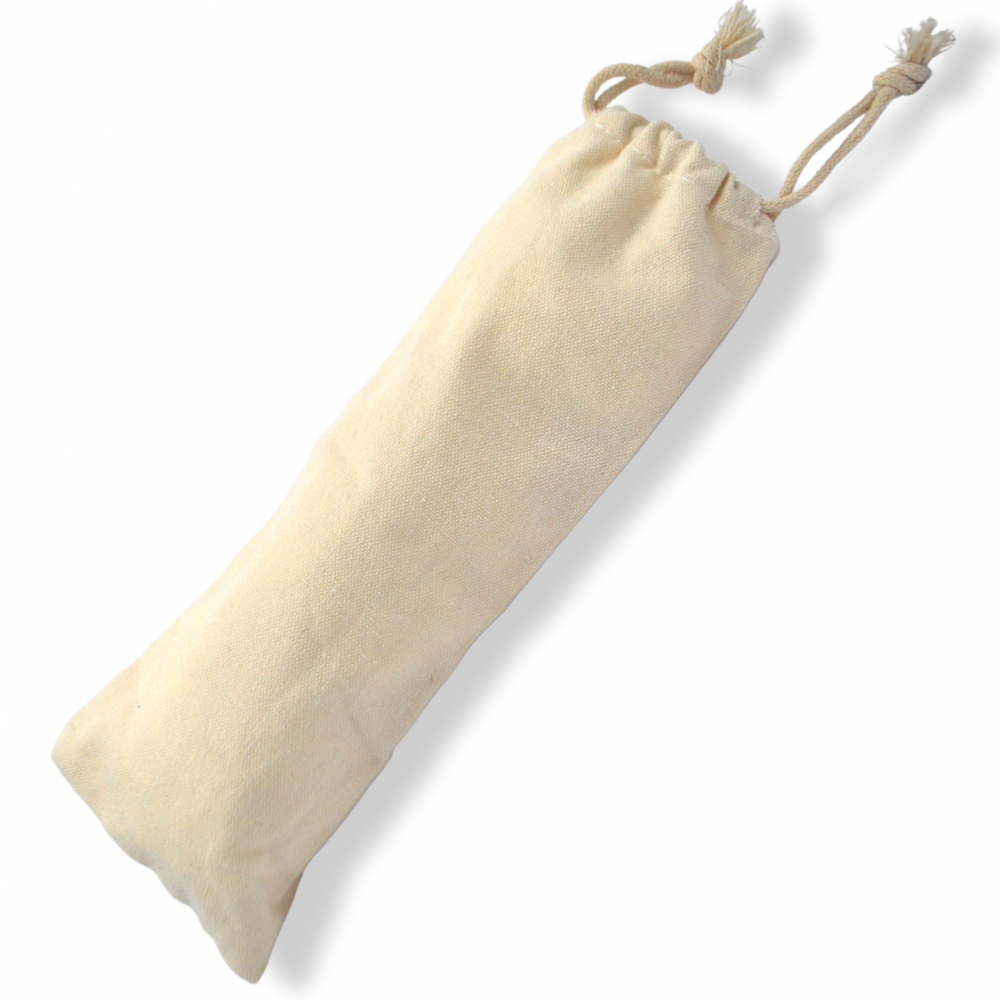
Here's a little gift to say "Welcome to the SUNNYBOD™ Family". Receive a FREE Brush Pouch & Canister Cleaning Brush with every Sunscreen Brush purchase. Stock is limited so act quickly. We don't want you to miss out!


Most people are surprised to learn that even when they buy SPF 50+, they may only be getting a fraction of that protection. It’s not because the sunscreen doesn’t work, it’s because most of us simply don’t apply enough.
Australian research and public health guidance consistently show that sunscreen is often under-applied in real life. And when less sunscreen is used than the amount required during testing, the level of protection achieved is reduced.
That means an SPF 50+ sunscreen, when applied too thinly, may behave more like a much lower SPF in practice.
One of the simplest ways to reduce this gap between recommended and real-world sunscreen use is a method commonly known as the three-finger rule.
While it’s not a formal regulatory standard, it has become a widely used, practical guideline for parents, teachers, and carers, particularly when applying sunscreen to the face, neck, and ears, which are among the most commonly sunburned areas in children.
This guide explains what the three-finger rule is, where it comes from, how it fits within Australian sunscreen standards, and how it can help families build more effective SPF habits.
In Australia, sunscreen is regulated by the Therapeutic Goods Administration (TGA) as a therapeutic good. For a sunscreen to carry an SPF rating, it must be tested under controlled laboratory conditions using a specified application thickness.
The challenge is that real life doesn’t look like a lab.
Parents are busy. Kids are wriggly. Sunscreen can feel cold, sticky, or unpleasant on the skin. And when children apply sunscreen themselves, they almost always use far too little.
Australian sun-safety messaging consistently stresses three key principles: apply enough sunscreen, apply it often enough, and cover all exposed skin. But “apply generously” is not very specific and is open to interpretation, especially during a rushed school morning.
That’s why simple, visual rules are so helpful, and why learning how to apply sunscreen correctly matters just as much as choosing a high-SPF product.

The three-finger rule is a visual guide used to estimate how much sunscreen should be applied to the face, neck, and ears.
To use it, sunscreen is squeezed along the length of three fingers, usually the index, middle, and ring finger. This amount roughly aligns with the volume commonly recommended for these high-exposure areas.
It’s designed to be easy to remember and simple enough to copy. Rather than guessing, the rule gives families a repeatable reference point.
The three-finger rule is not an official TGA measurement, and it does not claim to replicate laboratory testing conditions.
However, it addresses one of the biggest problem with sunscreen use in Australia, under-application.
SPF testing required for TGA-regulated sunscreens uses controlled conditions that most people don’t replicate in daily life. When sunscreen is applied too thinly, the protection achieved can be significantly lower than expected. Environmental factors like sweating, swimming, and rubbing off the sunscreen further reduce efficacy, making regular reapplication (every two hours) critical.
The three-finger rule acts as a practical approximation, helping people apply more sunscreen than they otherwise would. While not exact, it moves real-world behaviour closer to what’s needed for effective protection.
In short: it’s not perfect, but it’s far better than guessing.
Australian health authorities, including the TGA, do not formally recommend the three-finger rule by name.
What they do consistently recommend is applying sunscreen generously, covering commonly missed areas like ears and neck, and reapplying regularly.
Visual guides like the three-finger rule sit within this framework as educational tools, translating “apply enough sunscreen” into something families can realistically follow.
There are no Australian clinical studies that specifically test the three-finger rule in children. However, Australian sun-safety research clearly shows that we commonly under-apply sunscreen, particularly on the face, ears, hairline, and neck.
While children have smaller faces than adults, they also tend to miss areas and use very small amounts. A clear visual guide helps carers and children apply sunscreen more consistently with less variation or guessing.
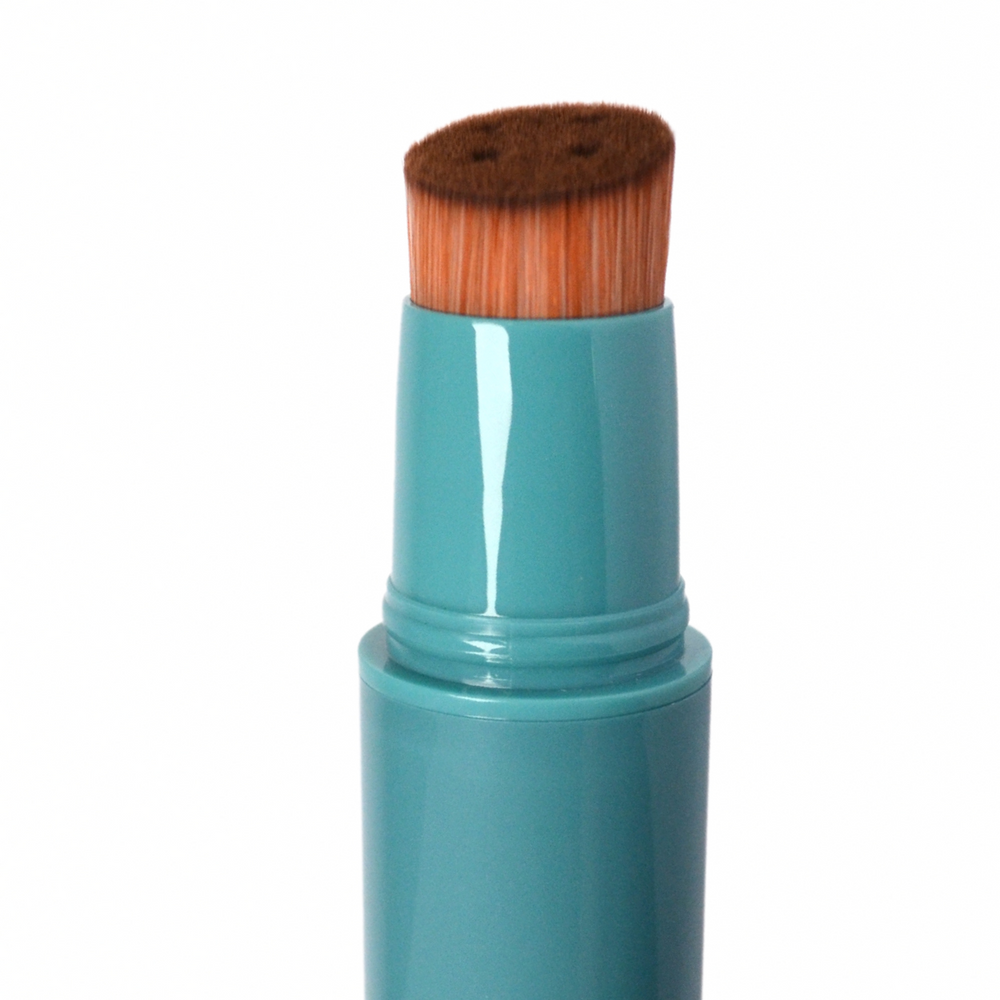
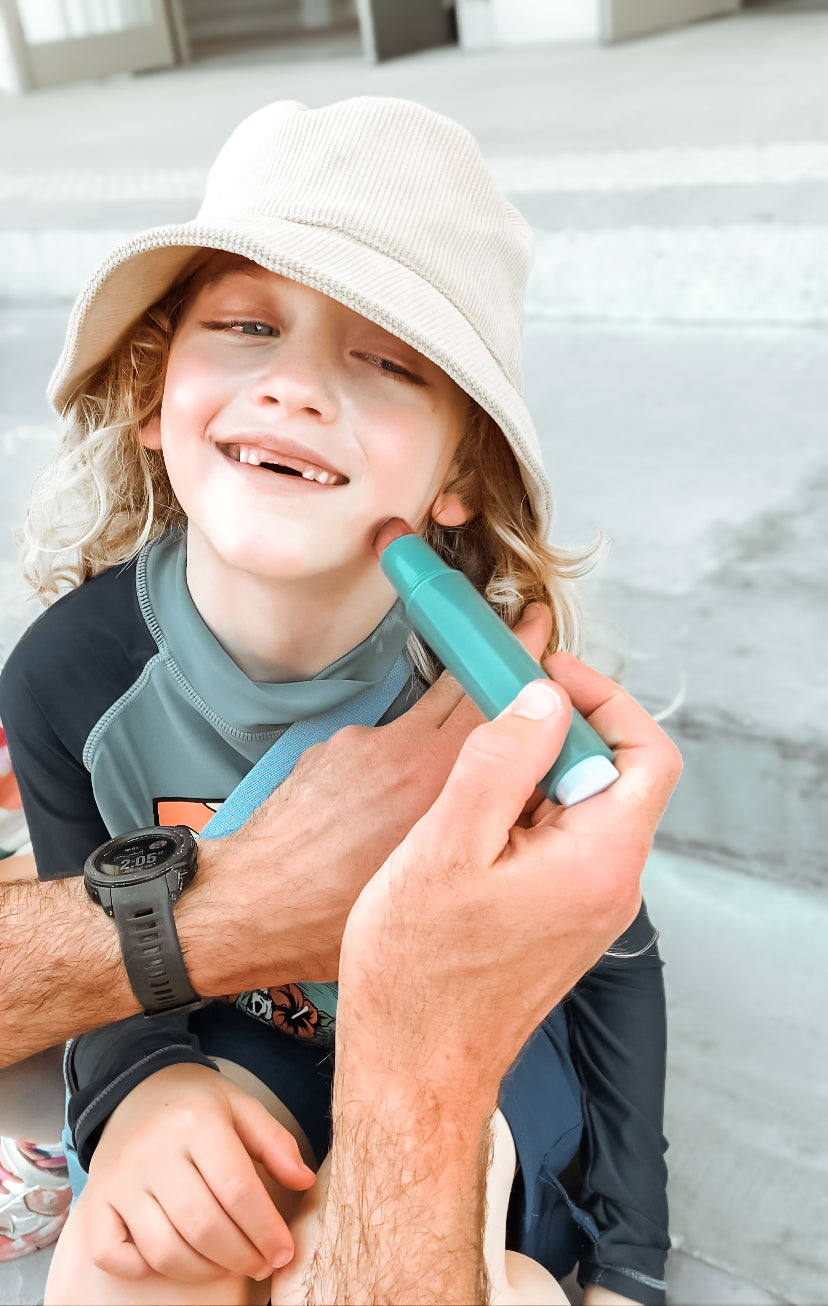
Tools that make application easier and less messy, particularly around tricky areas like ears, eyes, and the hairline can help children enjoy applying sunscreen and improve frequency of application. A sunscreen applicator brush like the SUNNYBOD SPF Brush are especially good when they’re learning to do it themselves or struggle with the sensory sensitivities triggered by sunscreen application.

One of the biggest misconceptions is that sunscreen is wasteful if applied generously. In reality, most sunscreen “failures” happen because the layer applied is too thin or spots are missed.
Other common issues include forgetting ears and the back of the neck, applying only once for the day, or letting children self-apply without guidance. Addressing these habits and understanding common sunscreen questions and reapplication guidelines can make a meaningful difference. (Our FAQs page answers many of these practical concerns.)
You may also hear about the teaspoon rule, another commonly referenced guideline in Australian sun-safety education. For adults, effective sun protection requires more sunscreen than most people expect. For each major body area, including each arm, each leg, the front of the body, the back of the body, and the face (covering the neck and ears) the recommended application is 5mL (approximately one teaspoon). When applied correctly, this adds up to roughly 35 millilitres of sunscreen for a full-body application, which is about seven teaspoons in total.
The difference is simple:
The three-finger rule is a visual guide used for the face, neck, and ears.
The teaspoon rule is an area-based guide used to estimate amounts for larger body sections.
Both aim to solve the same problem: helping people apply enough sunscreen without guessing.
They’re complementary, not competing.
No matter how well sunscreen is applied initially, it doesn’t last all day.
Australian guidance recommends applying sunscreen at least before 20 minutes before sun exposure, reapplying at least every two hours, and reapplying after swimming, sweating, or towel-drying.
Children are particularly active, which means sunscreen reapplication is a must to help maintain consistent protection.
The real value of the three-finger rule isn’t precision, it’s habit-building.
Simple, repeatable actions are far more likely to stick. When children learn a clear routine, they’re more likely to carry that behaviour into adolescence and adulthood.
For families, this might mean building sunscreen into the morning routine, reapplying before daycare, sport, or keeping sunscreen easily accessible in their school or beach bag for easy reapplication.
Australia has some of the highest UV levels in the world. Effective sun protection relies on a layered approach. Its important to remember that Sunscreen is only one component of sun protection. You should also avoid prolonged sun exposure. Always wear a hat, protective clothing, sunglasses and seek shade when exposed to the sun and reapply SPF frequently.
No single method works on its own. The three-finger rule fits into this broader strategy by helping ensure sunscreen, a critical layer of protection, is better applied in effective amounts.
The three-finger rule is simple, memorable, practical, and that’s exactly why it's helpful.
It doesn’t replace Australian sunscreen standards, and it doesn’t claim to be exact. Instead, it helps families bridge the gap between what’s recommended and what actually happens in daily life.
By giving parents and children a clear visual guide, the three-finger rule supports better sunscreen habits, more consistent coverage, and stronger everyday sun protection.
Small habits, repeated consistently, build the strongest protection over time.
Explore our game changing refillable sun applicators — made for homes, schools, sports programs, daycares, camps, and busy families everywhere.
Disclaimer:
This information is provided for general guidance only and is not intended to replace medical or professional advice. Always follow sun safety recommendations issued by your local health authorities, and consult your family doctor or healthcare provider if you have questions about sunscreen use, skin sensitivities, or individual needs.

The #1 Beauty Brush you can't live Without!
Welcome to The SUNNYBOD™ Blog — your go-to space for sun safety tips, parenting advice, expert insights, and all things outdoors. We’re passionate about making sunscreen fun, simple, and mess-free for families and sun lovers everywhere. Explore how-to guides, get your questions answered, discover parent hacks, and learn smarter ways to protect your skin. Whether you're a beach-goer, outdoor adventurer, or everyday parent, this is your hub for staying sun-safe with confidence and ease.
Your cart is empty
Spend another $1.00 and get free shipping!